What Are the Benefits of Microcement for Modern Homes?

Microcement has been gaining popularity in modern interiors, and it's easy to see why. Think soft cement tones, natural-looking textures and clean, uninterrupted surfaces that work beautifully with minimalist and wabi-sabi interiors.
Developed as a modern decorative surface system in Europe, microcement offers a way to achieve this look without installing traditional tiles. Even better, it can be applied over suitable existing tiles, making it an option worth considering if you're renovating.
But what exactly makes microcement different from ordinary cement, and is it worth choosing over tiles? Let's take a look.
What Is Microcement?
Despite the name, microcement isn't just ordinary cement spread over a surface.
It's a specially formulated decorative coating made from cement, fine aggregates, polymers and pigments. These ingredients allow it to be applied in thin layers over a properly prepared surface, creating a cement-like finish without the thickness of conventional concrete.
The result is a continuous surface with a range of colours and textures. Depending on the application technique, it can look smooth and understated or have subtle, limewash-like variations.
It's commonly used on floors and walls, particularly in homes that favour clean lines, natural materials and a minimalist aesthetic.
What Are the Main Benefits of Microcement?
1. A Clean, Minimalist Look
One of the biggest draws of microcement is its continuous finish. Without tile joints breaking up the surface, your floors and walls have a more uniform, understated appearance.
Depending on the application technique, you can achieve a clean cement look or a softer, more organic finish with subtle variations in colour and texture.
It's particularly suited to modern, minimalist and wabi-sabi interiors, where natural textures and imperfections are part of the appeal.
2. A New Look Without Hacking Away Your Tiles
Want to change your outdated floor tiles but dread the mess of renovation?
Microcement can be applied over existing tiles, provided they're stable and suitable for the coating system. This means you may be able to refresh your floors without hacking away the original tiles.
Less hacking also means less demolition debris, noise and disruption. For homeowners who want a new look without a major renovation, that's a pretty big advantage.
3. A Thin Finish That Can Save You Renovation Hassle
This is one of microcement's biggest practical advantages, especially for bathrooms.
When you hack away your existing bathroom floor and install new tiles, the finished floor height can change. Depending on the original levels and new tile thickness, you may need to adjust the toilet drop, floor transitions or even your doors.
Microcement is applied in a relatively thin layer. If your existing floor levels are already suitable, applying it over the tiles can help you achieve a fresh look without significantly changing the floor height.
That could save you from additional work elsewhere — and the extra cost and hassle that come with it.
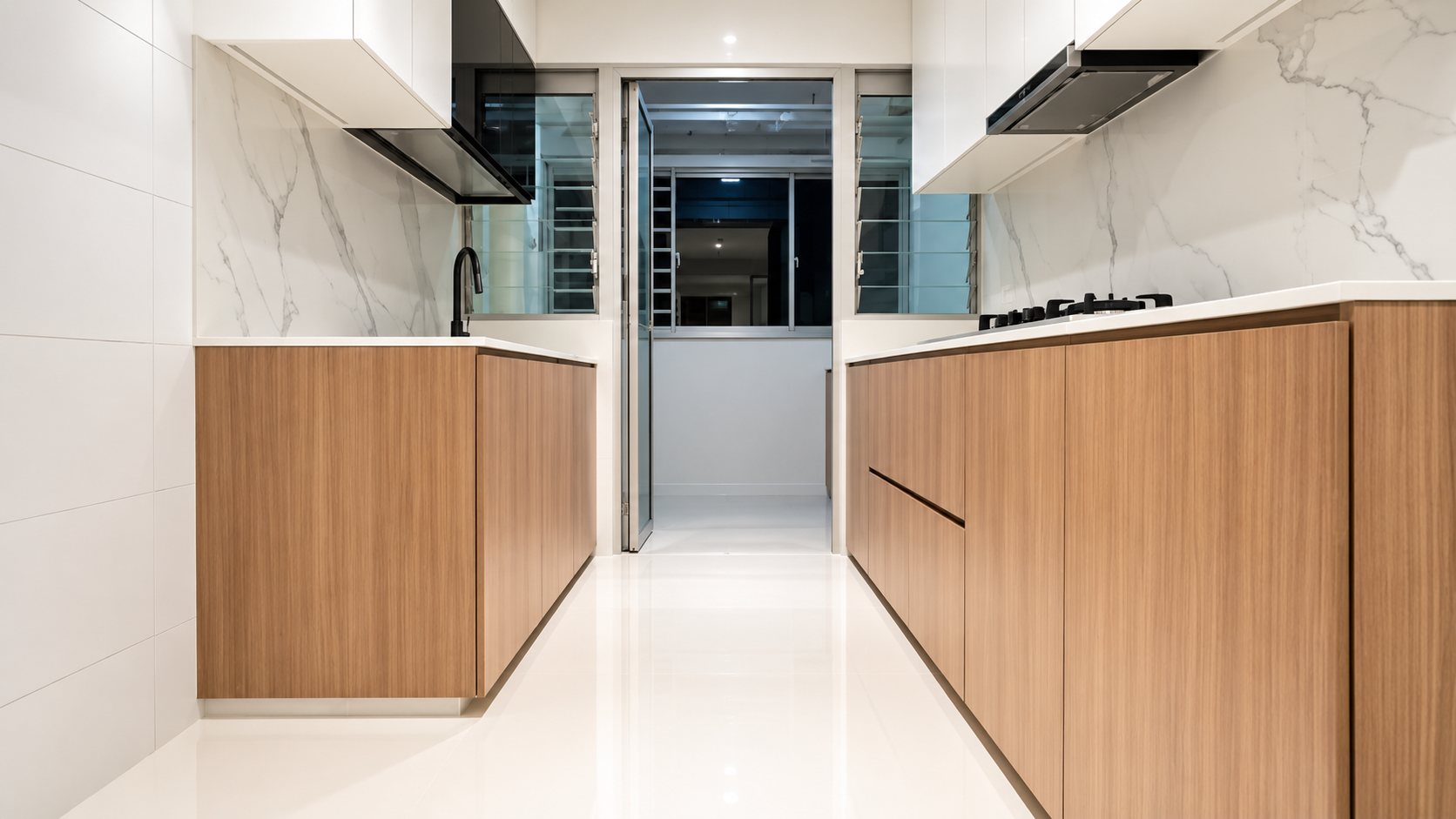
4. Customisable Colours and Textures
Microcement isn't limited to the usual grey concrete look.
Depending on the product and application technique, you can choose warm beige, soft grey, taupe and other shades to suit your space. The finish can also range from relatively smooth and uniform to a more textured, limewash-like appearance.
If you're going for a natural, understated interior, these subtle variations can add character without making the space feel busy.
One thing to note: microcement is hand-applied, so some variation in the final finish is expected. Ask to see a sample before confirming your preferred colour and texture.
5. Easier Everyday Cleaning
With no conventional tile joints across the finished surface, there are fewer grout lines to scrub.
Routine cleaning is generally straightforward with a soft mop or cloth and a compatible pH-neutral cleaner. Just avoid abrasive tools and harsh cleaning products that could damage the protective sealer.
It's not completely maintenance-free, but it can make everyday cleaning less of a chore.
Where Can You Use Microcement at Home?
Microcement can work in several areas, but the right system depends on how the surface will be used.
- Bathroom floors and walls. Microcement can give your bathroom a more cohesive, modern look, especially when similar finishes are used across the floor and walls. Its continuous finish also means fewer joints to clean.
- Living room floors. If you prefer a clean, continuous floor instead of individual tiles, microcement is worth considering. Its understated texture works particularly well with minimalist furniture, natural wood and neutral colour palettes.
- Kitchen floors and backsplashes. Microcement can create a seamless finish that complements modern kitchens. For backsplashes and other surfaces exposed to grease, stains or frequent cleaning, make sure the selected system is suitable for the intended use.
Microcement vs Tiles: Which Is Better for Your Home?
If you're renovating and can't decide between microcement and tiles, it comes down to the look you want and how much work your existing surfaces need.
| Microcement | Traditional tiles | |
|---|---|---|
| Appearance | Seamless, cement-like finish with customisable textures | Individual tiles with defined patterns and joints |
| Interior style | Great for minimalist, modern and wabi-sabi interiors | Suits everything from classic to contemporary styles |
| Renovating existing tiles | Can be applied over suitable existing tiles | Full replacement generally involves hacking and retiling |
| Floor height | Thin application may help preserve existing floor levels | New tiles and installation layers can change the finished floor height |
| Cost | May be more economical when it avoids hacking and retiling | Depends heavily on tile choice, hacking and installation costs |
| Repairs | Local repairs may leave visible differences | Individual tiles may be replaceable |
Is Microcement Cheaper Than Tiles?
It can be, especially when you're applying it over existing tiles.
With a full tile replacement, you're paying not just for the new tiles, but potentially for hacking, debris disposal, surface preparation, installation and related work such as adjustments to floor levels or doors.
Microcement can reduce some of these costs if the existing surface is suitable and the original floor levels can be retained.
However, it isn't automatically cheaper. The price of your chosen tiles, the size of your renovation and the preparation required will all affect the final cost.
Our take: If you love the clean, natural look of microcement, it's worth exploring before committing to a full tile replacement. You may get the new look you want without taking on as much demolition work.
Is Microcement Right for Your Home?
Microcement is worth considering if you love the look of natural cement finishes, want a clean and minimalist interior, or are looking for a way to refresh existing tiles without extensive hacking.
It's particularly worth exploring if you're already planning to replace your tiles. Depending on your existing floor levels and surface condition, microcement could give you the new look you want while avoiding some of the additional work involved in a full tile replacement.
At Tintin Painting, we're experienced in working with a wide range of microcement systems and finishes. This allows us to recommend a suitable system based on your preferred look, existing surfaces and renovation needs.
For a more detailed explanation of installation, materials, costs and suitability, read our Microcement in Singapore guide.
Frequently Asked Questions
Does microcement look like real concrete?
Microcement has a cement-like appearance, but it isn't the same as a solid concrete slab. Its finish can be customized to look smoother, more textured or more natural, depending on the application technique.
Can you customize the colour of microcement?
Yes. Microcement comes in different shades, from warm beige and off-white to grey and charcoal. The final appearance also depends on the application technique, so it's worth viewing a sample before choosing your finish.
Is microcement suitable for small bathrooms?
Yes. Its continuous finish can help a small bathroom feel less visually cluttered, especially when similar colours are used across the floor and walls.
Does microcement come in different textures?
Yes. Depending on the product and application technique, you can achieve anything from a smooth cement finish to more textured, organic-looking surfaces.
Is microcement the same as limewash?
No. Limewash is a paint finish made with lime, while microcement is a cement-based decorative coating. However, certain microcement systems and application techniques can mimic the soft, cloudy variations of limewash while providing a finish suitable for floors and other surfaces, depending on the product.
Can microcement be used throughout the entire home?
Yes. Depending on the system, microcement can be applied to floors, walls, bathrooms, kitchen backsplashes and selected countertops. Using complementary finishes across different areas can help create a cohesive look throughout your home.
Thinking about microcement for your bathroom, floor or feature wall? WhatsApp us a photo of the space. We'll tell you honestly whether it suits the surface, then come down for a free site visit.
WhatsApp Us