Why Mould Keeps Coming Back After Removal and Remediation
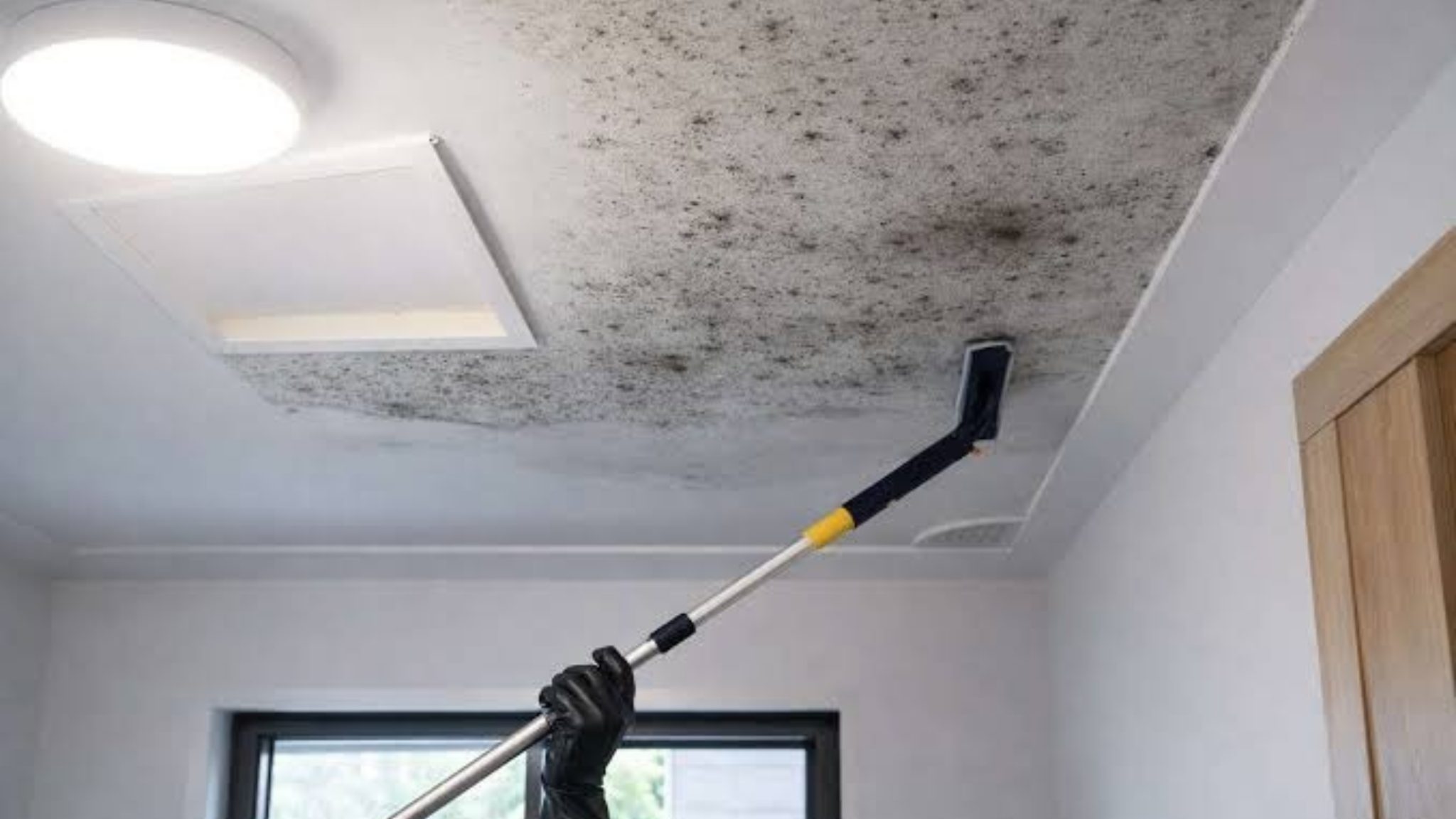
You cleaned it, repainted it, and a few months later the dark patches are back. At Tintin Painting, we see recurring mould on ceilings and walls every week, and it almost always comes down to the same few reasons. Effective mould remediation Singapore homeowners can depend on should address the underlying cause, not just cover the stain. This guide explains why mould returns and what can help stop it for good.
- Why Mould Comes Back After Removal
- The Moisture Source Was Never Fixed
- Only the Surface Was Cleaned
- No Sealer or Primer Under the Paint
- Poor Ventilation
- Condensation on Pipes and Trunking
- Ordinary Paint Instead of Anti-Mould Paint
- Mould on Walls in Singapore: Why Our Climate Makes It Worse
- Is It a Failed Treatment or a New Problem?
- How Professional Mould Treatment Prevents Recurrence
- What You Can Do After Treatment
- Why Homeowners Choose Tintin Painting
- Frequently Asked Questions
- Stop the Mould for Good
Why Mould Comes Back After Removal and Remediation
Mould needs moisture, a surface to settle on, and time. Remove the visible growth but leave those conditions in place, and it simply regrows. Here are the most common reasons.
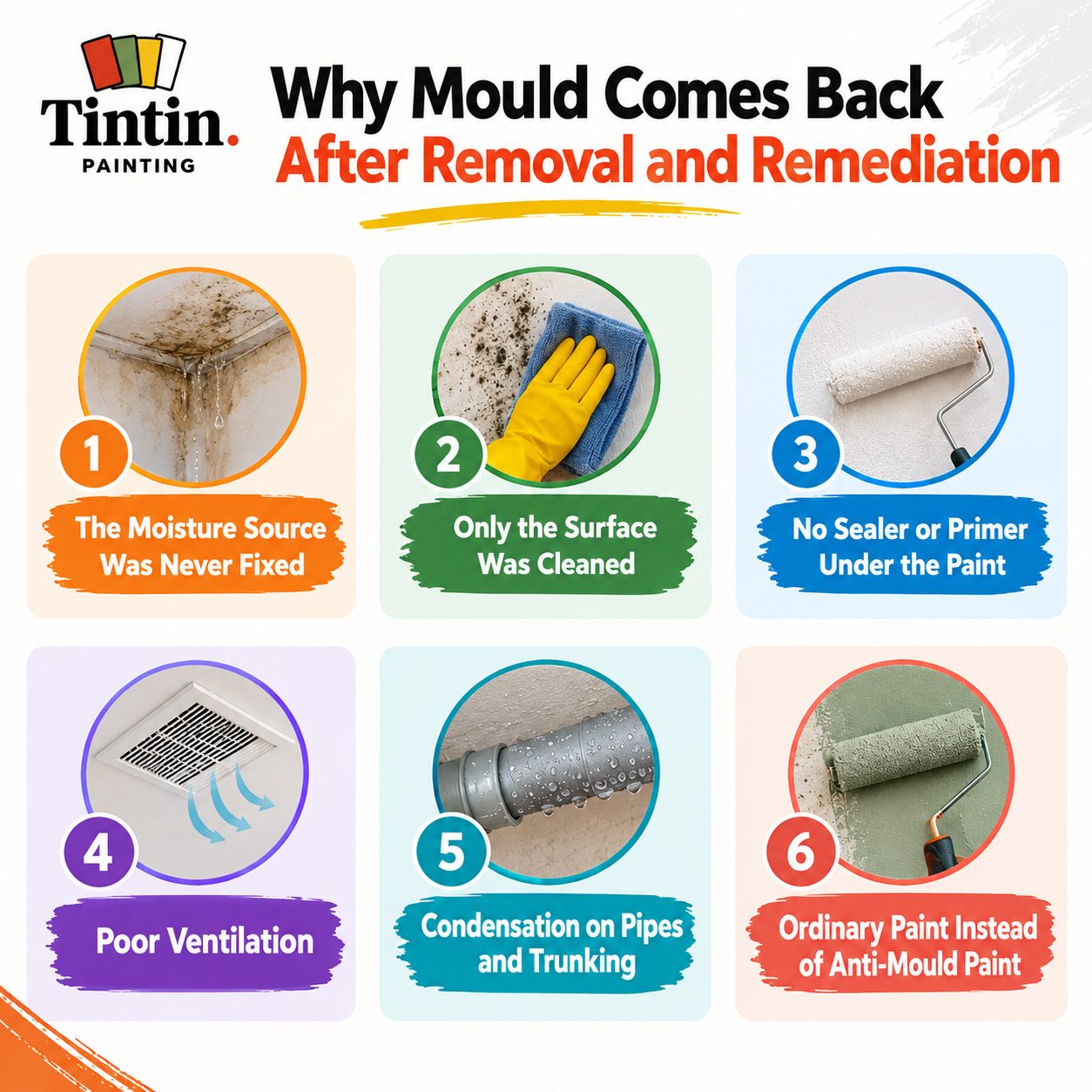
1. The Moisture Source Was Never Fixed
This is the number one cause. A leak from an upstairs unit, a seeping external wall or a faulty bathroom waterproofing layer keeps feeding the same spot. No matter how well the surface is treated, mould will return while the water keeps coming. A good contractor looks for the source first, and tells you honestly if it must be repaired before any work begins.
2. Only the Surface Was Cleaned
Wiping or bleaching mould removes what you can see. Mould roots can sit in the paint layer and the plaster beneath. Without an anti-fungal treatment that is left to work properly, these remnants regrow, often within weeks.
3. No Sealer or Primer Under the Paint
Painting straight over a cleaned surface is a common shortcut. Without a mould-resistant primer, moisture and stains bleed through the new coat, and spores underneath find their way back. Sealing is what locks the treated surface.
4. Poor Ventilation
Bathrooms, store rooms and service yards trap humid air. If steam and damp cannot escape, walls and ceilings stay damp for long periods, which is exactly what mould needs.
5. Condensation on Pipes and Trunking
Cold pipes and aircon trunking collect condensation that drips onto nearby ceilings and walls. The mould keeps returning because the dripping never stops.
6. Ordinary Paint Instead of Anti-Mould Paint
Standard paint has no resistance to Singapore's humidity. Genuine anti-mould paint adds a protective finish, but it only works when applied over a properly treated and sealed surface.
Mould on Walls in Singapore: Why Our Climate Makes It Worse
With high humidity all year, any wall or ceiling that holds moisture becomes a place where mould can grow. That is why mould on walls in Singapore is so common in HDB flats, condos and landed homes alike, especially near windows, aircon units and external-facing walls.
This does not mean mould is unavoidable. It means prevention must be built into the treatment itself, and it must be backed by good habits afterwards.
Is It a Failed Treatment or a New Problem?
Not every return is a failure. Here is a simple way to tell.
- Same spot, within weeks: usually the original cause was missed or the treatment was incomplete.
- A different area, months later: often a new leak, a change in ventilation or a new habit, such as drying laundry in a closed room.
- Mould near pipes or trunking: check for condensation first.
If you are unsure, send us a photo and we will help you work out which it is.
How Professional Mould Treatment Prevents Recurrence
A proper mould treatment service is more than a repaint. At Tintin Painting, a typical job follows these steps:
- Photo assessment and free site visit. We check how far the mould has spread behind the surface, test for damp and look for the moisture source.
- Removal and preparation. Loose and affected paint is scraped back, the surface cleaned, and the area sheeted off so spores do not spread to other rooms.
- Anti-fungal treatment. The surface is treated and left to work before anything is coated over it. This is the step skipped on a standard repaint.
- Sealing and priming. A mould-resistant sealer stops moisture and staining from bleeding through.
- Anti-mould repaint. The finish coat is anti-mould paint suited to Singapore's humidity.
- Walk-through and warranty. We show you what to watch for and hand over your warranty.
This is the difference between mould removal Singapore homeowners pay for once and Limewash vs Texture Paint choices that help them avoid cosmetic fixes they pay for repeatedly.
What You Can Do After Treatment
Treatment works best when your daily habits support it.
- Run exhaust fans or open windows during and after showers and cooking.
- Avoid drying laundry in enclosed rooms.
- Wipe condensation from windows and pipes.
- Fix leaks and dripping fittings promptly.
- Check treated areas regularly in the first few weeks, so any early sign is caught quickly.
Why Homeowners Choose Tintin Painting
As a painting company Singapore homeowners can contact directly, we combine mould treatment with proper repainting, so one team handles the cause and the finish. Here is what you get:
- Free site visit with no obligation, and your exact price confirmed on the spot.
- Root-cause treatment before any paint goes on.
- 12-month workmanship warranty. If mould returns in a treated area because of our work, we redo it at no charge.
- Honest advice. If an active leak or a room with no ventilation will undermine the job, we tell you before we start.
We treat bathroom ceilings, walls, pipes, trunking, kitchens, store rooms and commercial spaces across Singapore. You can see our full mould treatment and repaint service for details.
Frequently Asked Questions
Can mould really come back after professional removal?
Yes, if the moisture source was not resolved or the surface was not treated, sealed and repainted properly. A complete process greatly lowers the risk.
How long should treated mould stay away?
If the root cause is fixed and the room is ventilated, it should not return. Our work carries a 12-month workmanship warranty.
Does a warranty cover every new patch of mould?
Usually not. Warranties cover the treated area where the problem is due to workmanship. A new leak or a new moisture issue is a separate matter.
Why does mould keep coming back to Singapore homes?
Singapore's high humidity, along with leaks, poor ventilation and condensation, creates ideal conditions for mould. Unless the moisture source is fixed and the room can air out properly, spores will settle and regrow, often in the same spot.
What can I do to stop mould from returning after treatment?
Keep the room ventilated, run a dehumidifier or air-con in damp spaces, and wipe away condensation. Repair leaks quickly, and avoid leaving wet items or furniture pressed against treated walls. If a damp patch appears again, have it checked early before it spreads.
Stop the Mould for Good
If mould keeps returning on your walls or ceilings, the answer is treating the cause, not repainting the symptom. Send Tintin Painting a photo on WhatsApp at +65 8995 1933 for a quick assessment, or book a free site visit and get a clear price.
WhatsApp Us